Children’s House (3-6)
Early Childhood Montessori Education
West Coast Montessori’s Children’s House classrooms are led by a dedicated and highly-trained Montessori teacher, supported by an education assistant, with a purposeful 1:10 ratio.
Students typically begin this program around their third birthday—often referred to as pre-kindy in mainstream education—attending five mornings a week from 8:30 am to 11:45 am. As they demonstrate readiness, four-year-olds (Kindergarten) gradually transition to full-day attendance (8:30 am to 3:00 pm). Five-year-olds (Pre-Primary) attend five full days each week to complete the three-year cycle.
Program Highlights
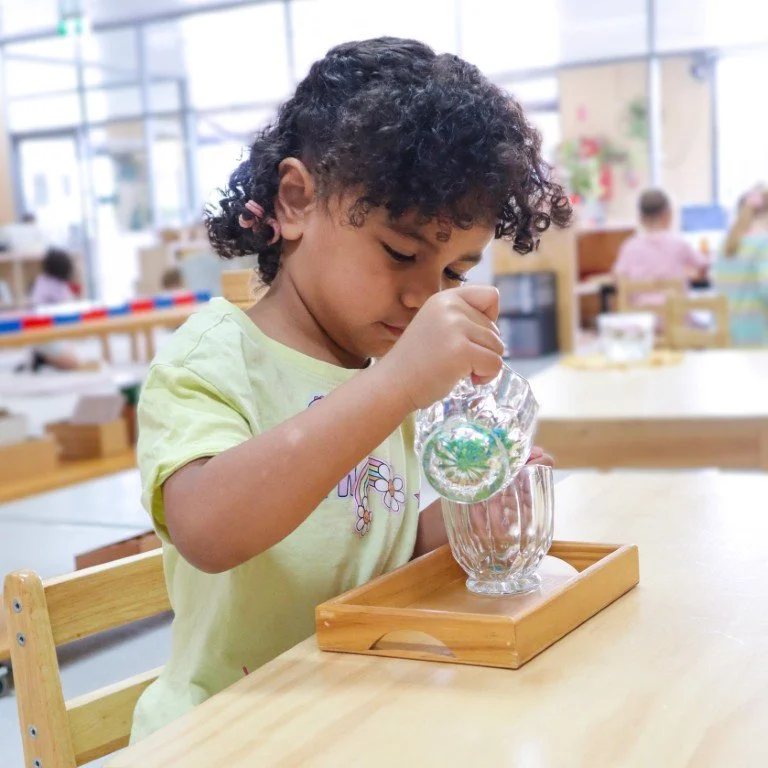
Functional Independence: We empower children with real-world skills that often surprise parents. In the Children’s House, you will see three-year-olds independently preparing their own snacks, pouring drinks from glass carafes, and washing their own dishes. By mastering these "adult" tasks with real tools, children develop a profound sense of self-worth and the literal realisation that they are capable, contributing members of their community.
The Three-Year Leadership Cycle: While many mainstream settings group children by birth year, our Children’s House brings together three, four, and five-year-olds in a single environment. This social dynamic allows younger children to learn through observation, while the older children develop deep confidence and leadership skills as they mentor their younger peers. This "mini-society" fosters empathy, patience, and a strong sense of belonging.
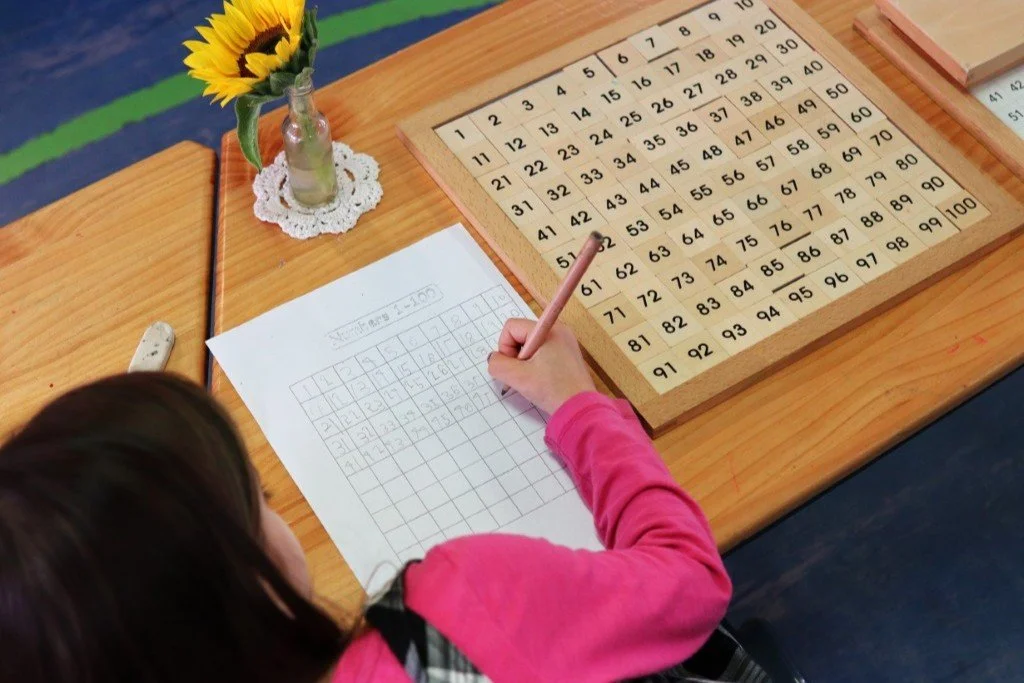
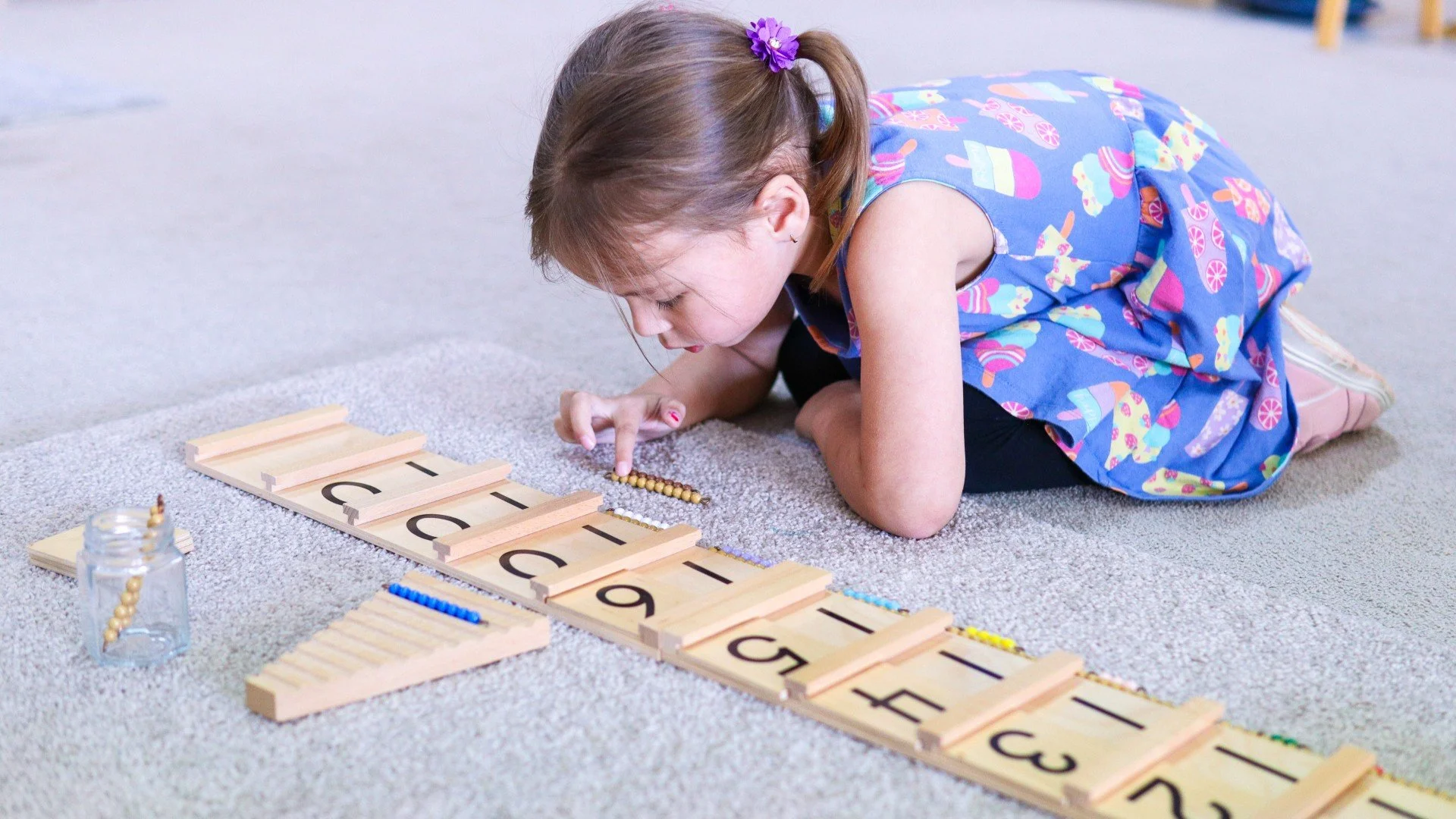
Spontaneous Literacy & Numeracy: By using tactile, self-correcting materials, children often move naturally into reading, writing, and mathematical operations as their personal interest peaks.
Deep Concentration: Our daily rhythm provides uninterrupted time for students to become fully absorbed in their chosen activities, building the stamina and focus required for later schooling.
Intrinsic Motivation: Because students choose their own work within a structured framework, they develop a genuine internal drive to learn rather than working for external rewards.
Curriculum & Learning Areas
The Children’s House program is carefully structured around five key areas, aligned with the Early Years Learning Framework (EYLF) for Australian Early Childhood:
Practical Life: This is the heart of the classroom, focusing on the care of self and the environment. Through activities like food preparation, plant care, and even polishing wood or brass in our child-sized kitchen, students develop fine motor coordination and manual dexterity. More importantly, these tasks bridge the gap between home and school, turning "chores" into a joyful expression of independence and responsibility.
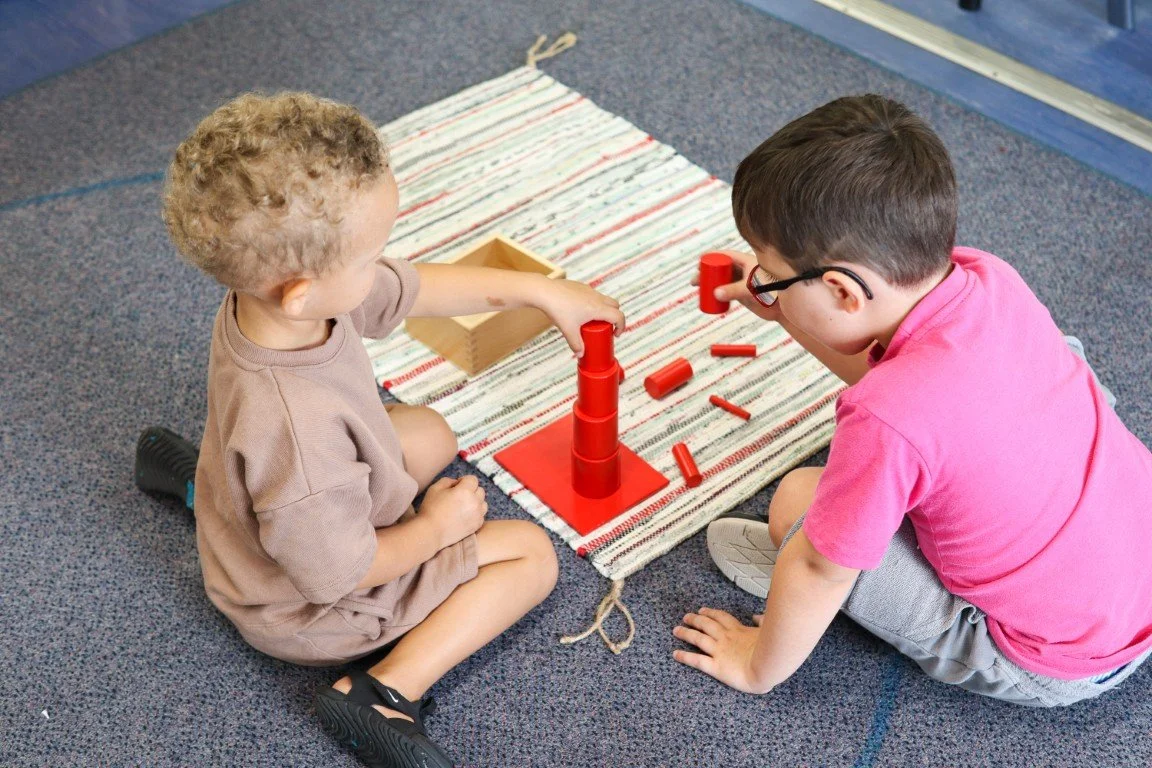
Sensorial: Precise materials, such as music bells and the tower of cubes, help students classify and organise sensory experiences, laying the foundation for abstract thought.
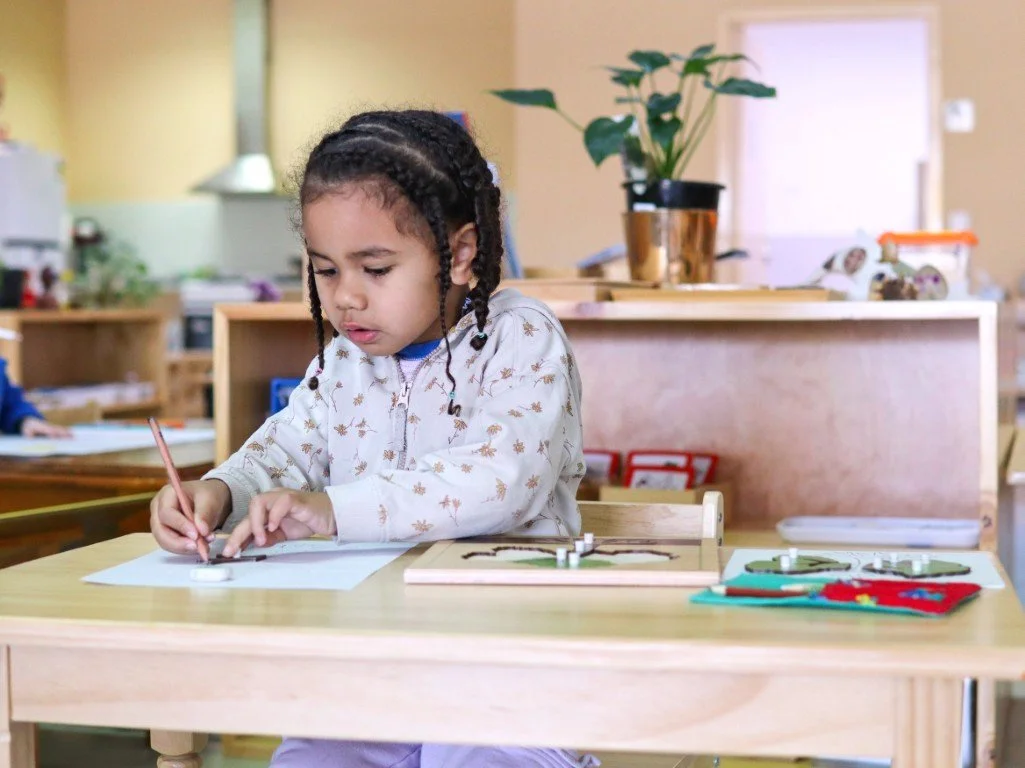
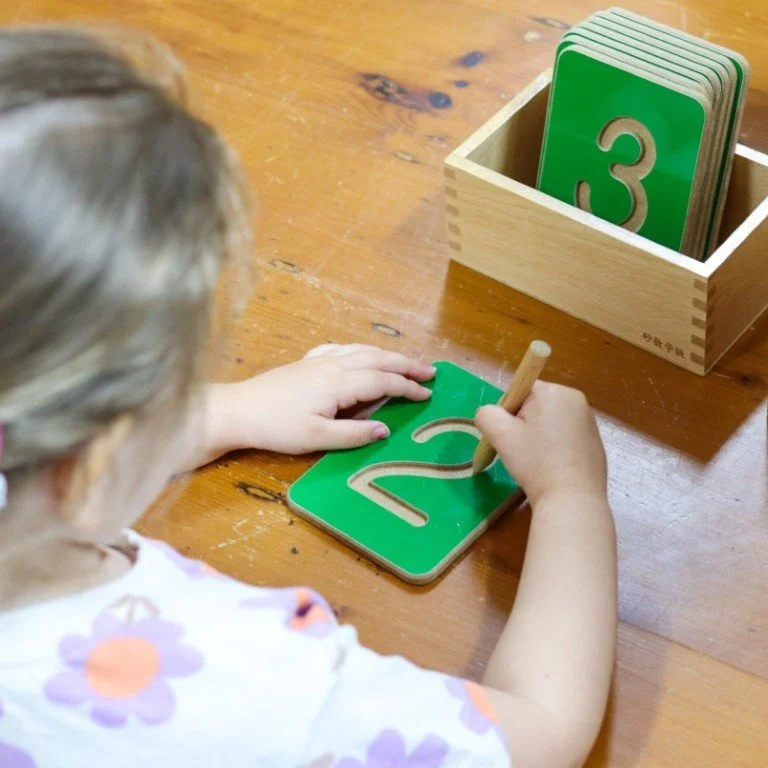
Language: We nurture oral communication through stories and songs, while written language begins naturally through phonetic exploration and sandpaper letters.
Mathematics: Children link concrete experiences with abstract concepts, exploring sequence, dimension, and the foundations of basic operations.
Cultural Activities: Includes Science, History, Geography, and the Arts, fostering curiosity and a sense of belonging in the wider world.
The Prepared Environment
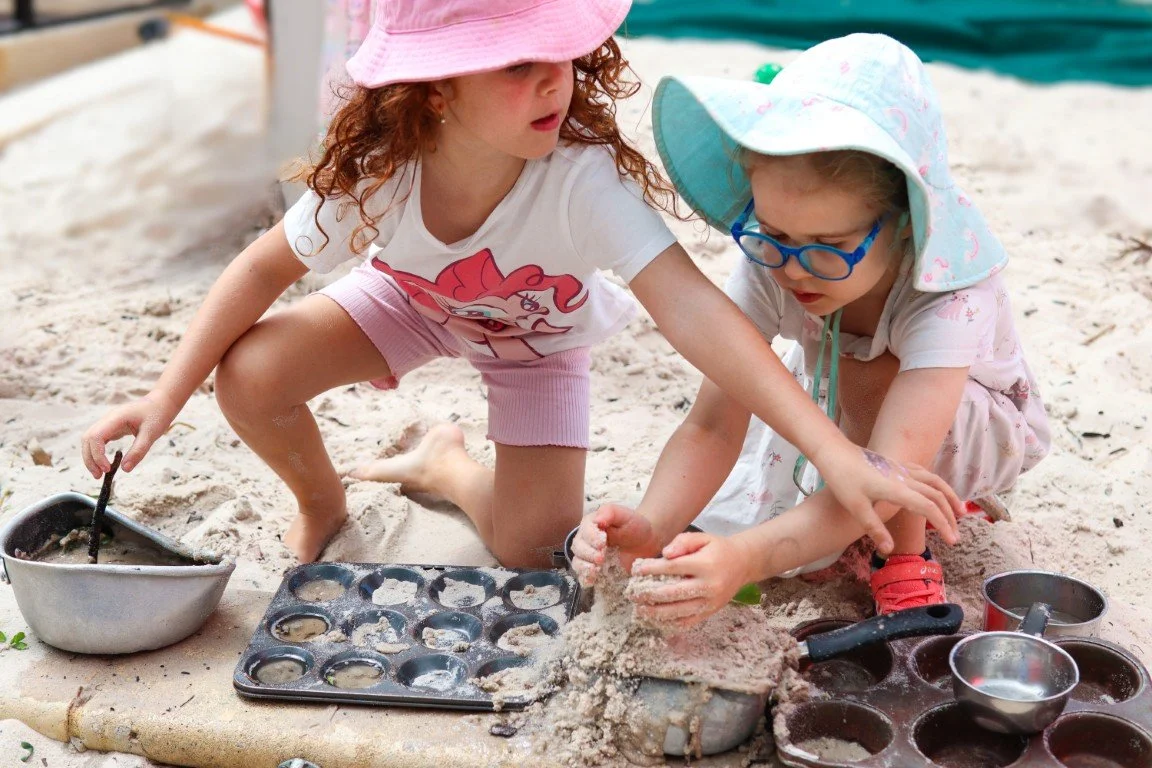
Our classrooms are designed as a prepared environment where every detail is tailored to the child's physical and developmental needs. Everything in a Children’s House classroom is positioned at the child’s height and within easy reach, from low, open shelving to appropriately sized furniture and tools, allowing students to select, use, and return materials independently. Within this calm and orderly space, learners are free to explore a wide range of specialised materials, working independently or in small groups while remaining engaged in meaningful activities that support self-construction and academic growth.
Path to Lower Primary
The Children’s House is the foundation for our Lower Primary (6–9) program. By age five to six, students have typically developed the social maturity and academic stamina required for complex collaborative projects. We work closely with families to ensure each student is emotionally and academically ready to transition into Lower Primary school environment when the time is right.
Watch our Children’s House video
Discover the difference a Montessori education can make. Book a tour, view our classrooms, and experience our approach in action.